Using your iPhone to Write a Nursing Care Plan

Yep, whip those phones out nursing students!  Make sure you have the NANDA app downloaded to your smart phone.

nanda app.jpg

NANDA, once known as North American Nursing Diagnosis Association, offers nurses and students standardization in assessing and treating their patients.  NANDA has a collection of nursing diagnoses and can be accessed through technology via application with a smart device.

In searching for my triggering question, Can nursing students use the NANDA 2017 app in the clinical setting to guide nursing care plans as well as gain new knowledge pertinent to the clinical details of their patient?  I used the third and fourth performance indicators in the ISTE Standard 4: Critical Thinking, Problem-Solving and Decision Making to guide my search for an answer!  Below is my coggle for this search!


Can_nursing_students_use_the_NANDA_2017_app_in_the_clinical_setting_to_guide_nursing_care_plans_as_well_as_gain_new_knowledge_pertinent_to_the_clinical_details_of_their_patient

I thought that the required reading for this module, A Creative Thinking Approach to Enhancing the Web-based Problem Solving Performance of University Students was very interesting.  It suggests that problem-solving is built on a scaffolding model of fact finding, problem finding, idea finding, and solution finding.  It also suggests that this type of learning method is more effective for the intuitive type student compared to the analytical type student.  A nursing student develops his or her intuition during nursing school and during the first years spent as a registered nurse.  I think that this method is an effective way for nursing students to gain new knowledge from web-based sources.

Introduce the NANDA app.  This app is invaluable for students in writing nursing care plans.  nursing care plan
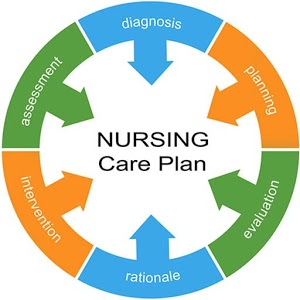
Students can use the information provided in this app to acknowledge significant clinical detail about their patient and create actions to improve clinical status of their patients.  The accessibility of the application can encourage students to excel in their nursing plans.  I believe the answer to this question for Module 4 is a complete yes!  I am excited to use this application in my future opportunities as a nursing instructor.

References

A creative thinking approach to enhancing the web-based problem solving performance of university students. (2013). Computers and Education, 72, 220–230.

NANDA International Inc. (2017). Nursing diagnoses: definitions and classifications. Retrieved August 9, 2017, from http://www.nanda.org/nanda-international-nursing-diagnoses-definitions-and-classification.html

Student Resources: Nursing Diagnoses. (2016). Retrieved August 16, 2016, from http://allnurses.com/nursing-study-tips/student-resources-nursing-424826.html

2 6

We are turning twenty-six this Saturday.  I’m so grateful for each and every single day.  I am grateful for my family, my health, and the opportunity and means to pursue dreams.  Here are some other thoughts about turning one year older…

  • I have a significant amount of white hairs on my head.  This is due to both genetics and stress.  Sort of wondering how twenty-six will look?
  • I’m young and I’ve done a lot: professionally, personally.  I think everything can only get better.  I have so many unopened and waiting doors for me.  I know it!
  • I still get carded.
  • I’m getting older and so are my family members!  My mom, my grandparents.  My little sister! Hold on, hold on!
  • Twenty-six years old was my gram’s ‘age’ no matter what.  I miss you Gram.  I promise to live this beautiful life for you.  I hope you know that I have never forgotten you.  Lately I’ve seen pictures of myself and think that I look just like you.

And for my actual birthday? I’m excited to eat a cupcake.  Can’t imagine of welcoming this new year without my favorite treat!

Nursing Research Literacy

ISTE Standard 3: Research and Information Fluency

Students apply digital tools to gather, evaluate, and use information.

a. Plan strategies to guide inquiry

b. Locate, organize, analyze, evaluate, synthesize, and ethically use information from a variety of sources and media

c. Evaluate and select information sources and digital tools based on the appropriateness to specific tasks

d. Process data and report results


Triggering Event

How can students demonstrate creative thinking, construct knowledge, and develop innovative products and processes using technology?

Personalized Triggering Event Question

How can nursing students use technology to identify a high-quality research article?


For this ISTE standard, I was very interested in exploring online technology/tools to aid nursing students in identifying high-quality research articles.  The skill to identify a quality research article is important for baccalaureate nursing students.  It is important because the profession of nursing is evidence led.  This means that in an ideal world, nursing practice is based on evidence, on research, to provide care that has been proven effective through high-quality research.

I thought it would be beneficial for me to define “high-quality” research.  What does this mean? In the exploration phase of this module, I discovered:

Screen Shot 2017-08-04 at 11.39.31 AM

This site defines high-quality nursing research to include ethical standards.  Ethically sound nursing research should include the standards of informed consent, protection anonymity and confidentiality.

The performance indicator in this standard that I was most attracted to was indicator B: “Locate, organize, analyze, evaluate, synthesize, and ethically use information from a variety of sources and media.”  I wanted to find a tool that could help students locate and organize high-quality nursing research.  I also wanted to find a tool that could help nursing students read and deconstruct research articles.  My online search produced great results with my first goal, but I was unable to achieve results for my second goal.  I decided to focus on tools that helped students locate and organize high-quality nursing research.

Here is my coggle map that I used to organize my thoughts for this module: high quality

Two databases that I found were TRIP and iSEEK.  These tools only provide high-quality articles, so it serves as a safe zone and method to evade the presence of fake news.  The disadvantage of these tools is that students will not be able to practice and develop their skill of discernment.  They can still, however, identify parts of a research article that is important in determining the quality.  Is this article peer reviewed?  What is the sample size?  Can the experiment and process be easily replicated?  Information literacy can still be practiced when locating articles from trusted sources (American Library Association, 2016).  During this part of my exploration, I reflected on the the Education Week video included in the assigned module readings.  If elementary students are learning how to discern authentic new from fake news, then nursing students should practice this skill as well.  As a future nurse educator, I can help teach students about the importance of having articles peer reviewed and the significance of validity and replication status.

To organize information, students can utilize Mendeley.  This reference manager is a great tool for nurses and nursing students.  It keeps your research articles organized and formulates APA citations.  The individual can sort articles by creating folders within Mendeley.  Furthermore, if the individual downloads the application into Word, citations can easily be done in the text.  It is a timesaver and acts as a personal assistant with research articles.

This module revealed valuable tools in identifying sound databases to retrieve authentic, high-quality research and methods for organizing research articles.  Unfortunately, I did not answer my triggering question as I expected.  It seems the the tools/instruction methods for nursing students to decipher research articles are slim.  As a future nurse educator, I will keep this in mind and be sure to continue my research for such a tool or develop my own tool for nursing students!


References

American Library Association. (2016). Information Literacy Competency Standards for Higher Education. Retrieved August 4, 2017, from http://www.ala.org/acrl/standards/informationliteracycompetency#ildef

Education Week (video). (2017). How Media Literacy Can Help Students Discern Fake       News. Education Week.

Heale, R., & Shorten, A. (2016). Ethical context of nursing research. Evidence Based Nursing, 20(1), 7 LP-7. Retrieved from http://ebn.bmj.com/content/20/1/7.abstract


Module 2 ISTE2 Collaboration and Communication

ISTE 2 Module

Collaboration and Communication

Learning Objectives

Students will:

  1. Identify digital tools that can be used to help them interact, collaborate, and publish.
  2. Determine which media and/or format options work best to communicate information and ideas effectively to different audiences.
  1. Use digital tools to enhance cultural understanding and global awareness by engaging with learners of other cultures.
  1. Utilize digital tools to contribute to small group projects, produce original works and solve problems.

Triggering Event

How can students demonstrate creative thinking, construct knowledge, and develop innovative products and processes using technology?

Triggering Event Question: How can nursing students use educational technologies to learn about culturally competent care?


In approaching Module 2, I had to foster my creative side in discovering what educational technologies could be used to teach students about culturally competent care.  This was a challenge for me.  I strongly believe that cultural immersion is the most effective way to learn a culture.  Cultural immersion can encourage deep appreciation and capture in depth cultural knowledge.  Delivering culturally competent care, in my opinion, is no different.  As a nurse, you get better and better with practice and increased familiarity.  I knew that this Module and ITSE standard would be difficult for me!

That being said, I thought a great place to start was in the assigned readings.  I enjoyed the literature that advanced internet applications, or Web 2.0 (Facebook, blogs, Youtube, for example) could be used to develop cultural competence (Ertmer et al., 2011).  I immediately hoped that I could find an informative and emotionally moving TED talk that discussed cultural competence.  Much to my surprise, I could not locate a TED talk on this matter.  I settled for a YouTube video that identified cultural competence in nursing (Towson University, 2012).  I thought this could be a great starting point for students to first identify the concept of culturally competent care.  But how would students be able to demonstrate cultural competence?  Could they effectively communicate across diverse cultures and state the importance of cultural difference (Ertmer et al., 2011) after viewing a quick video?

My search continued.  Here’s my Coggle map!

I was intrigued by one of my classmate’s inclusion of Pinterest for students to meet ITSE 2.  I was able to find this on Pinterest, which was really great.  Informative, aesthetically pleasing.  This pin covers basic culturally competent care: 83e3c7de88e64e0e98af81b5a2ba20f5

I thought that this could be used to identify culturally competent care but would not give the opportunity for students to to demonstrate cultural competence.  I continued to search.

I came across the idea of microblogging.  Classrooms have adopted Twitter and use their classroom accounts to interact across cultures to increase their skill in language and explore cultural significance ( Lomicka & Lord, 2012).  I thought that this was brilliant!  I still thought it would not substitute the in person interactions for culturally competent care, but it could be a good starting point for nursing students.

Culturally competent care is so important for nurses.  In fact, the American Association of Colleges of Nursing require that students are able to demonstrate culturally competence (2008).  To deliver quality care, a nurse must be able to understand cultures different from her own.  I am so passionate about this and excited that there are educational technologies to explore cultural competence!  I think these technologies (YouTube, Pinterest, Twitter) are great resources for the student to build her confidence in understanding cultural competence and prepare her to practice cultural competence in her clinical setting and amongst the classroom!

To answer ITSE 2, I think that microblogging would increase engagement with learners of other cultures but I find it most beneficial for the nursing student to learn from the patient population.  We can learn a great deal from our peers and their past experiences but the patient encounters in practicing culturally competent care are interactions that have profound impact.

References:


American Association of Colleges of Nursing. (2008). The Essentials of Baccalaureate Education for Professional Nursing Practice. Retrieved from http://www.aacn.nche.edu/education-resources/BaccEssentials08.pdf

Ertmer, P. A., Newby, T. J., Yu, J. H., Liu, W., Tomory, A., Lee, Y. M., … Sendurur, P. (2011). Internet and Higher Education Facilitating students ’ global perspectives : Collaborating with international partners using Web 2 . 0 technologies. The Internet and Higher Education14(4), 251–261. https://doi.org/10.1016/j.iheduc.2011.05.005

Lomicka, L., & Lord, G. (2012). A tale of tweets : Analyzing microblogging among language learners. System, 40(1), 48–63. https://doi.org/10.1016/j.system.2011.11.001

Towson University, 2012. What is culturally competent healthcare? [Video file]. Retrieved July 20, 2017,
https://www.youtube.com/watch?v=E4k8YWqkjqo (Links to an external site.)

Module 1 ITSE1 Creativity and Innovation

ITSE Standard 1: Creativity and Innovation

  1. Apply existing knowledge to generate new ideas, products, or processes
  2. Create original works as a means of person or group expression
  3. Use models and simulations to explore complex systems and issues
  4. Identify trends and forecast possibilities

Triggering Event: How can students demonstrate creative thinking, construct knowledge, and develop innovative products and processes using technology?

Triggering Event Question: How can nursing students demonstrate creativity through educational technology when mastering a newborn physical assessment?

When I first thought of this question, I was worried about the availability of resources concerning creativity and nursing.  Sure, I’ve learned to be creative in “the field” but during school I remember there was a strong emphasis on book-reading, lecture, and some simulation done in house.  No additional educational technologies encouraging creativity occurred in my undergraduate degree.

In researching this topic using the ITSE1 as my guide, I learned that educational technologies are abundant and growing ever present in nursing schools.  I was so excited with this prospect!

My first reading that played on my future nurse educator heart strings was the article by Soh.  This article discussed several concepts used in teaching, one of which really grabbed my interest: Scientific Creativity (Soh, 2017).  Yes!!  How can I incorporate that to deliver quality education for my future students? I did some brainstorming with Coggle:

Coggle ITSE1 Map

I settled that I would incorporate simulation within my plan to meet the ITSE1.  My plan is for future students to be able to learn and master newborn physical assessment skills with learning the assessment in the skills lab, filming themselves and posting it for their instructors (me!) and fellow students to watch.  Then, as a group, we would be able to constructively critique, debrief, and make action plans for improvement in achieving competency for the newborn physical assessment.  This should take place prior to the beginning of their OB clinical so they could perform adequate physical exams during their clinical time at the hospitals.  This project could foster creativity in the nursing students, competency with educational technologies (sim and video recording and posting), as well as communication and community within their cohort. I believe that this activity would also encourage originality within individual nursing practice.  I think that as long as the critical parts of the physical exam were executed in the simulation videos (or subsequently acknowledged if not included within the video) each student could express their own personality through their practice.  Everyone has a different way of doing things in nursing!  I think this could be accepted earlier on, starting in clinical experiences.

Here’s a great video of nursing students demonstrating a newborn assessment.

References:

Soh, K. (2017). Fostering student creativity through teacher behaviors. Thinking Skills and Creativity, 23, 58–66. https://doi.org/10.1016/j.tsc.2016.11.002

The University of Michigan-Flint. General (basic) infant nursing assessment – nursing students. [Video file] Retrieved July 8, 2017 from https://youtu.be/zC0pcXnrd8E.

bPortfolio…

What better way to bring my blog back to life than an educational requirement?

I am currently pursuing my MSN at Seattle Pacific University to become a Nurse Educator.  One of the classes I am taking requires us to have a bPortfolio.  I am excited to learn about educational technologies and how to integrate them into my future teaching.

If you have any ideas/comments about using technology in nursing education, please feel free to share with me!  Thanks guys!

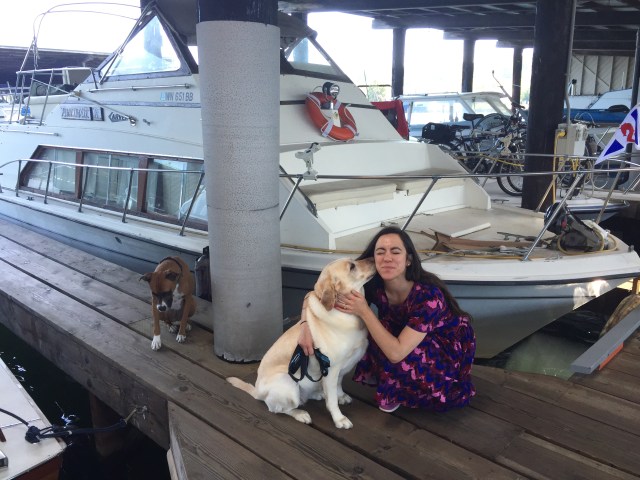
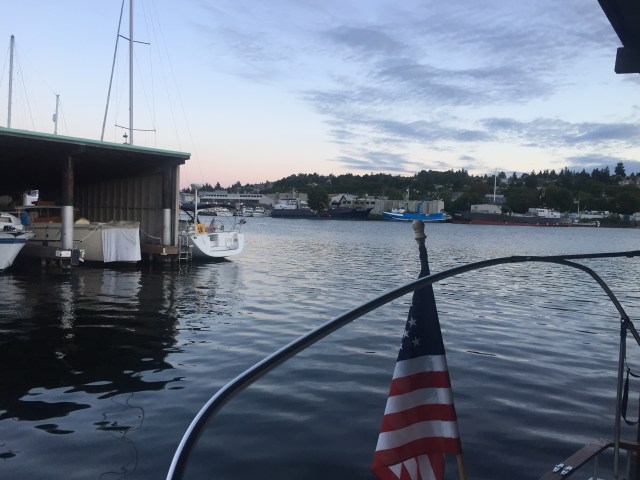
We moved onto the boat!

imageimageimage

And it was MY idea! Rental houses in Seattle are crazy expensive and ‘saving’ is really hard to do…. After many days and nights full of prayer and reflection, I decided we would move on the boat while I attend grad school. And as far as our future savings go, I hope this will kickstart our opportunity to save up to buy our first home after I graduate.

Its been a time of adjustment – and I’m surviving. Actually last night my hubs mentioned to me that he thought we’ve settled in nicely. I nodded and smiled as we sat on our little back porch, enjoying the cool night.

There are definitely a lot of perks to our new location. I love being able to walk basically everywhere! Love it!

Excited for this new chapter in our lives and the new adventure that awaits. See you on the water! 😉

Overdue Whole 30 Reflection & Review

First, my hub’s review is probably going to be more entertaining than mine. You can read it here: http://ben.lobaugh.net/blog/202603/whole-30-in-review

Second, I don’t believe we made it the actual 30 days. Life happens.

Third, I learned a ton. About me.  And food.  And me and food.

I learned I don’t do dairy. Yuck yuck yuck. My tummy feels much happier, healthier.  If I accidently consume dairy I’m a train wreck with a huge tummy ache.

I also learned how important it is to stop and read the labels in the grocery store. That it is easy to eat wholesome food. That herbs, spices are your (tasty) friends. And my list making and organization rocked the whole 30.

My hubs and I learned that we are two meals + snacks kind of people. During a normal day (which I’m not a lifeless sleeping zombie recuperating or preparing for night shift) we eat breakfast/brunch and dinner. Usually. Three meals for us is a lot. We like snacking, which wasn’t endorsed by The Whole 30. We made it work. I don’t think my hubs starved…. Too much 😉

Following that last statement, I also learned my hubs believed he had scurvy during The Whole 30 (absolutely ridiculous) See link above.

And I want to do it again! We felt so great after the first week. It’s really touched my eating habits and made me a better nutrionista for myself. Except now. I’m having candy for dinner. Oops.

Review done. Got to consult the calendar to see when we can do our second Whole 30!

Father’s Day Cards

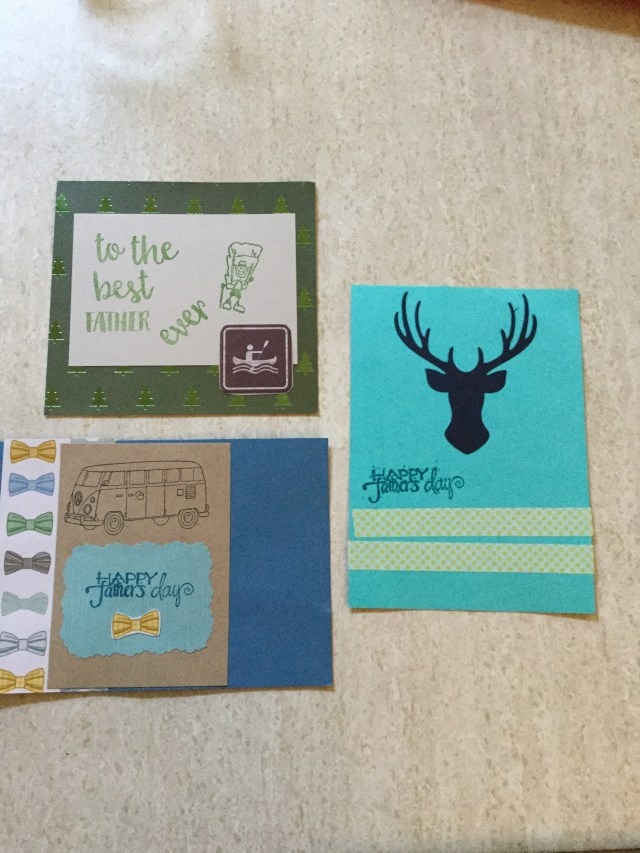
In a hurried, thoroughly enjoyed few days I made Father’s Day cards for our patients in the NICU. They turned out so great, and I even had a chance to work on them with one of my lovely girlfriends. The Mother’s Day cards were sweet and the Father’s Day cards were just as cute! Loved all the outdoorsy themes I was able to create.

image

And I was so blessed to have received a donation of rubber stamps from one of my coworkers! I’m a happy stamper 🙂 can’t say my hubs was too pleased with the big bag I brought home 😉

Can’t wait for the next occasion to celebrate the babies and their families!

Happy Mothers Day 💖

For Mother’s Day this year, I made cards for all the babies in the NICU! I really enjoyed using my crafting time towards giving the NICU moms recognition for all their strength and courage. As a parent in the NICU, many losses are experienced as far as birth plans, having a newborn baby at home, feeding, holding, etc – everything is so different! I am completely honored to be working with the babies and families. Thank you to all the preemie moms out there and thank you to each and every MOM. You are strong, beautiful, fierce women.